AI has changed how people expect to interact with analytics.
Instead of navigating filters, opening reports, and interpreting charts manually, users now want to ask questions in natural language and get answers immediately. This shift makes sense. Conversational interfaces can reduce friction, lower the barrier to analytics, and make data feel more accessible to more people.
That is why many analytics products now add chat experiences on top of dashboards.
But there is a problem.
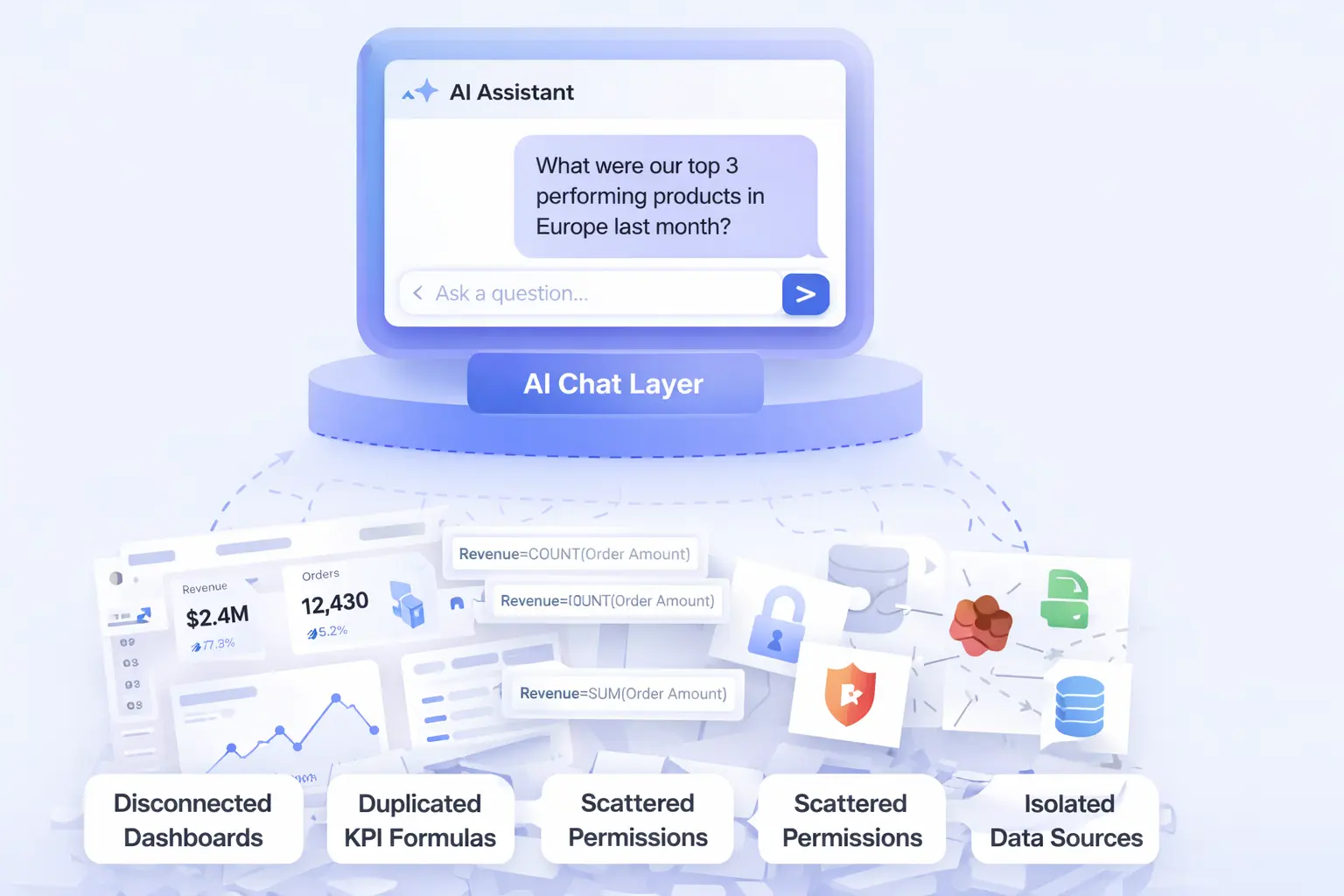
Adding AI chat on top of dashboards does not automatically create trustworthy analytics. It may improve access, but it does not solve the deeper issues that make analytics hard in the first place: inconsistent metrics, fragmented business logic, weak permissions, disconnected delivery models, and limited governance.
In fact, if those problems already exist, AI chat can make them more visible.
A chat layer is useful. But on its own, it is not enough.
Why AI Chat Feels Like the Next Step
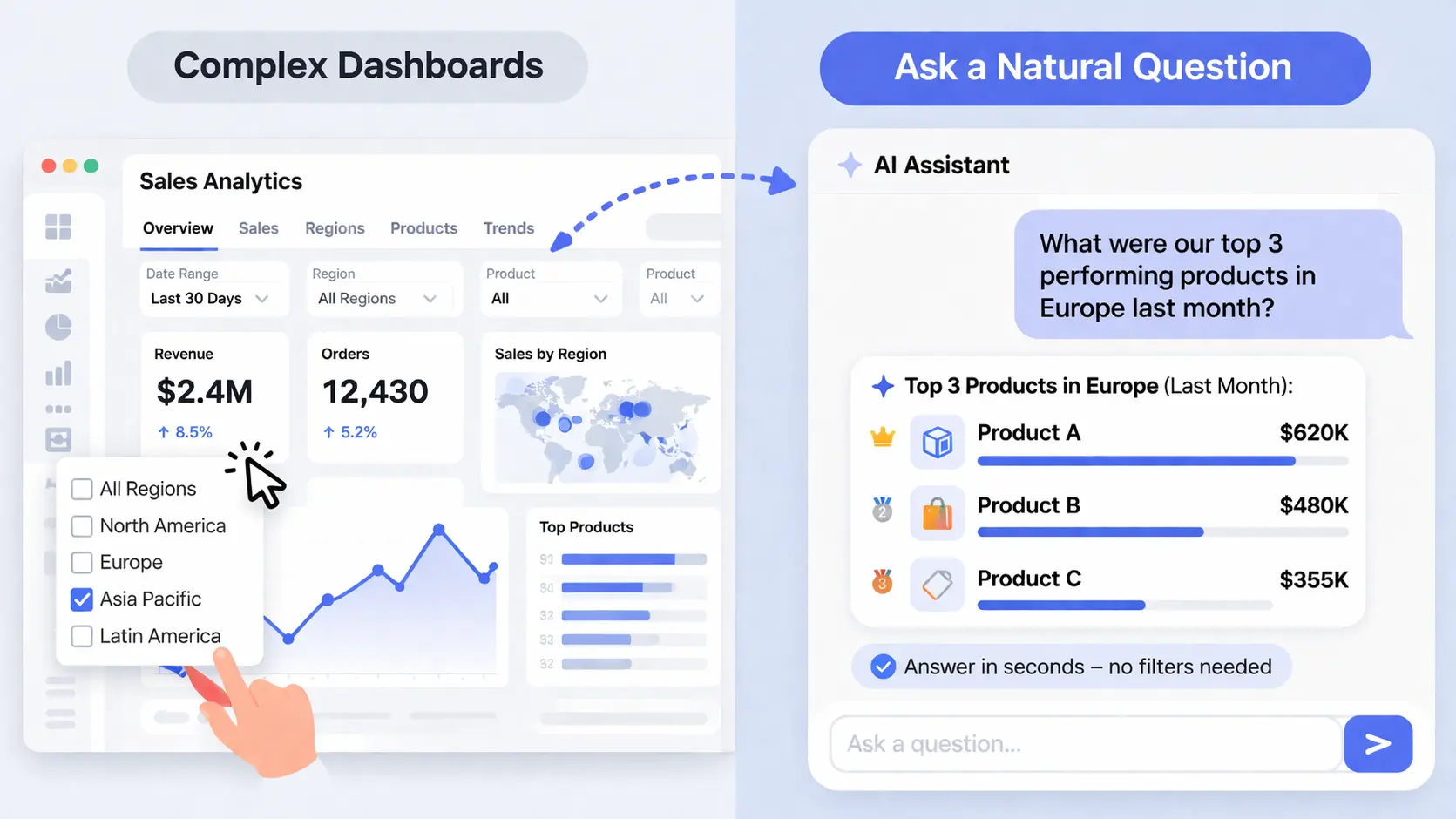
Dashboards are powerful, but they are not always easy to use.
Business users often need to know where to click, which filters matter, how metrics are defined, and which dashboard is the right one for the question they want to ask. Even when the data exists, the experience can still feel slow or intimidating.
AI chat promises something simpler:
- ask a question in plain language
- get an answer immediately
- avoid navigating multiple dashboards
- interact with analytics more naturally
This is a meaningful improvement in user experience. It can help more people engage with data, especially users who are not analysts or power users.
For many organizations, conversational access is becoming an expected part of modern analytics.
But better access is not the same as better analytics.
The Real Problem Is Usually Beneath the Interface
When organizations struggle with analytics, the issue is rarely just that dashboards are hard to use.
The bigger issue is that the analytics foundation itself is often fragmented.
Different teams may define the same KPI differently. Metrics may be embedded inside reports instead of managed centrally. Access rules may vary across tools. Internal dashboards and embedded analytics may rely on separate logic. Business meaning may live partly in SQL, partly in spreadsheets, and partly in people’s heads.
If AI is placed on top of that environment, it does not magically resolve the inconsistency underneath.
It simply provides a faster way to surface it.
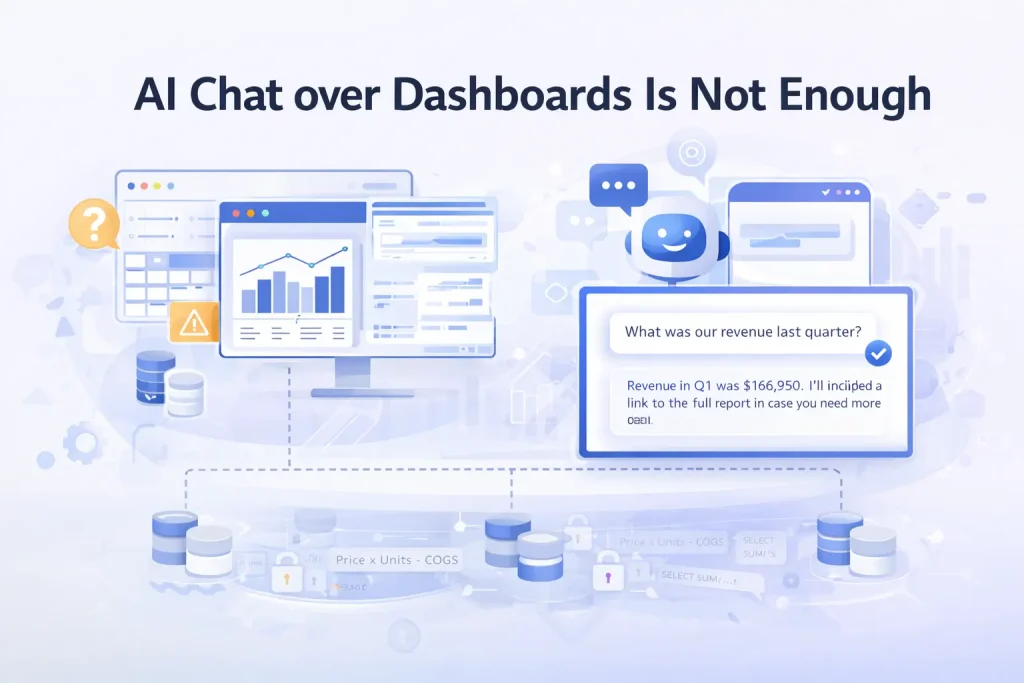
A user may ask, “What was last quarter’s gross margin?” and get an answer. But if the underlying definition of gross margin varies across teams, or if the AI is drawing from a dashboard with unclear logic, the speed of the answer does not make it trustworthy.
This is why AI chat alone is not enough. It improves the interface, not necessarily the foundation.
Where AI Chat over Dashboards Starts to Break Down
There are several common limitations when AI is added as a thin layer above existing dashboard environments.
1. It depends on whatever logic already exists
If dashboards are built on inconsistent models, duplicated calculations, or report-specific business logic, AI will inherit those problems. It cannot reliably produce trusted answers from untrusted foundations.
2. It often lacks true semantic understanding
Many chat experiences can summarize chart contents or interpret dashboard elements, but that is not the same as operating on a governed business model. Without a semantic layer, AI may understand labels and visual patterns but still miss the intended business meaning.
3. It can struggle across multiple assets
A single dashboard may answer part of a question, but business questions often cut across reports, datasets, functions, or delivery models. A thin AI layer tied too closely to individual dashboards may not provide a coherent cross-platform answer.
4. It does not solve access and governance
Users still need correct permissions, row-level security, role-based visibility, and trusted delivery controls. AI does not remove the need for governance. It makes governance more important.
5. It can create false confidence
Natural language interfaces feel authoritative. That can be helpful when answers are well grounded, but risky when they are not. Users may trust a fluent answer more than they should, especially if the system does not clearly expose definitions, logic, or lineage.
What Users Actually Need from AI Analytics
If organizations want AI to improve analytics in a meaningful way, the goal should be bigger than “chat with dashboards.”
Users do not just need a more convenient interface. They need answers that are:
- grounded in trusted business definitions
- consistent across teams and touchpoints
- secure and permission-aware
- explainable in context
- usable across dashboards, embedded analytics, and other delivery models
In other words, users need AI that operates on governed analytics, not just AI that speaks about charts.
That distinction matters.
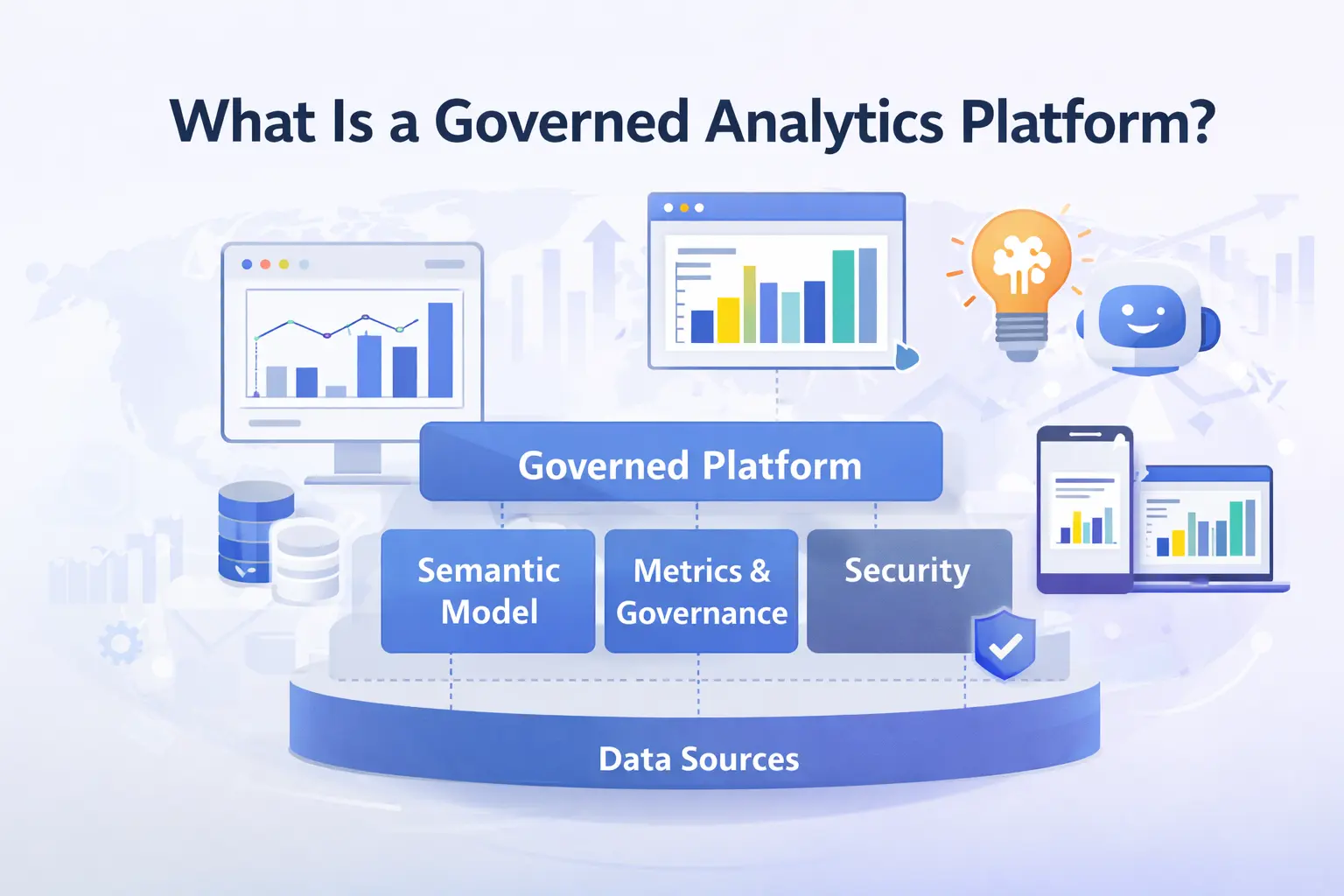
A conversational interface is only one part of modern AI analytics. The real value comes from what the AI is connected to: the semantic layer, the metrics model, the access controls, the reusable business logic, and the governed delivery framework behind the scenes.
Without those elements, AI may be convenient, but it will remain fragile.
From “Chat over Dashboards” to “AI on Governed Analytics”
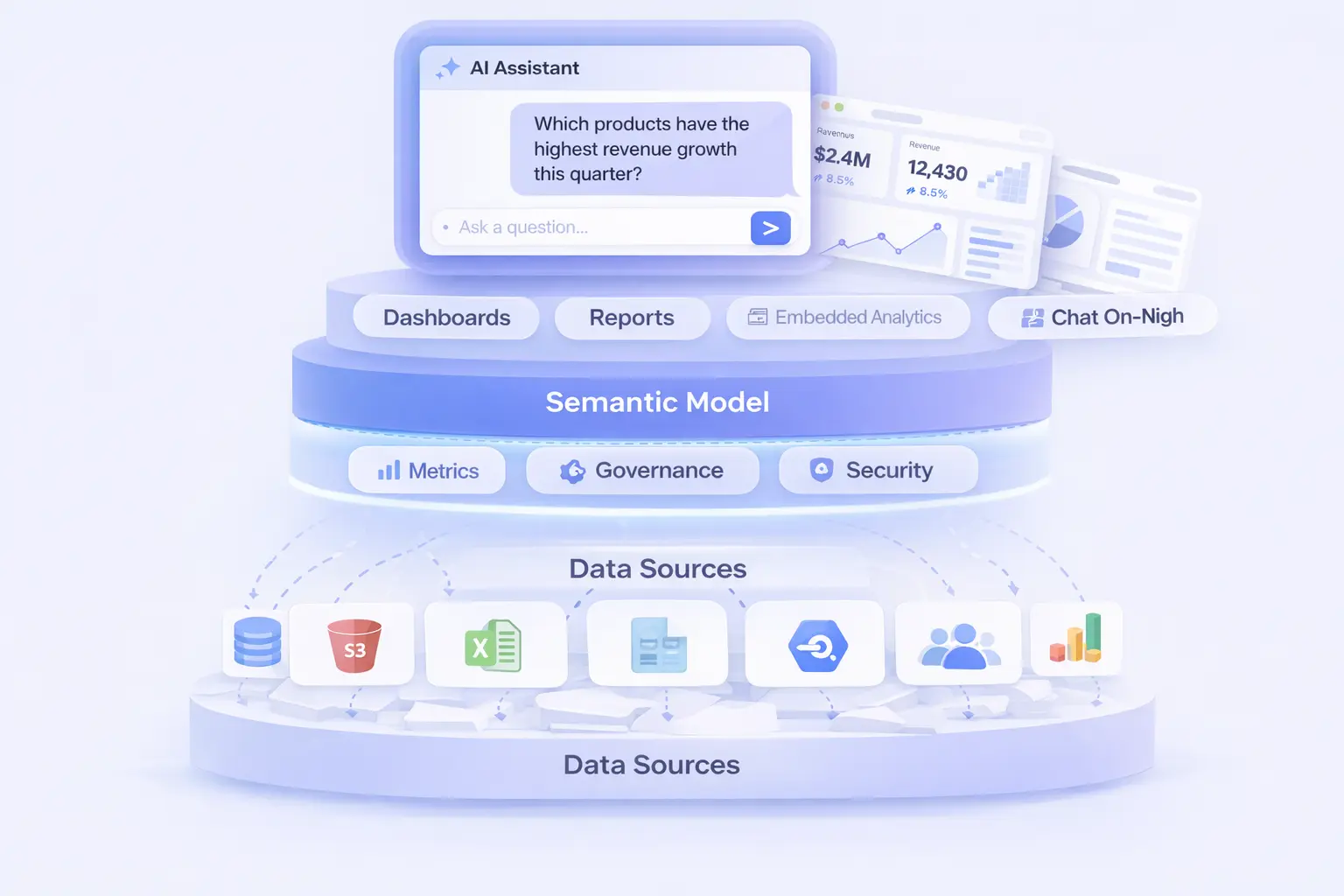
A more durable approach is to treat AI not as a feature floating above dashboards, but as a capability built on top of a governed analytics foundation.
That foundation typically includes several elements.
Semantic consistency
Metrics, dimensions, hierarchies, and business entities should be defined in a reusable and governed way. AI should answer based on shared business meaning, not report-by-report interpretation.
Permission-aware access
The AI experience must respect role-based access, row-level security, tenant isolation, and data visibility rules. A conversational interface should not become a shortcut around governance.
Reusable analytics logic
Instead of embedding business logic inside isolated reports, organizations need reusable models and governed metrics that can support dashboards, embedded analytics, and AI interactions consistently.
Cross-experience delivery
AI should not be limited to one dashboard page. It should be able to work across internal BI, embedded analytics, and other business touchpoints while preserving consistency.
Traceability and trust
Users should be able to understand where an answer came from, what definitions it used, and whether it reflects governed business logic. Trust in AI analytics depends on transparency as much as convenience.
When these pieces are in place, AI becomes much more than a chat widget. It becomes a governed interface to enterprise analytics.
Why This Matters for Enterprise Teams
The difference between chat-based convenience and governed AI analytics becomes especially important in enterprise settings.
Large organizations do not operate with one dataset, one report, or one user type. They have multiple departments, multiple roles, different access requirements, customer-facing use cases, and growing pressure to introduce AI responsibly.
In that environment, AI chat over dashboards may be useful as a demo or an entry point, but it is rarely enough as a strategic solution.
Enterprise teams need analytics that can scale across:
- business users and analysts
- internal decision-making and external delivery
- centralized governance and self-service access
- traditional dashboards and AI-powered experiences
If AI is going to become part of how the organization works with data, it cannot sit outside the governed analytics architecture. It has to be part of it.
The Role of the Semantic Layer in AI Analytics
One of the clearest differences between shallow AI chat and truly useful AI analytics is the role of the semantic layer.
The semantic layer gives structure to business meaning. It defines what a metric means, how dimensions relate, which hierarchies matter, and how different parts of the business should interpret the same data consistently.
This matters because AI does not just need data. It needs context.
Without semantic structure, AI may still generate answers, but those answers can be ambiguous, inconsistent, or overly dependent on specific dashboard artifacts. With semantic modeling, AI has a stronger foundation for producing answers that align with how the business actually defines and governs its analytics.
That is a major shift.
It moves AI from simply describing dashboards to operating on trusted analytical meaning.
What Better Looks Like
A stronger analytics experience does not force users to choose between dashboards and AI.
Users should be able to explore dashboards when they want visual context, trends, or detailed navigation. They should also be able to ask questions conversationally when they want speed, accessibility, or guidance.
But both experiences should be built on the same governed foundation.
That means the dashboard and the AI assistant should rely on the same definitions, the same access controls, the same business logic, and the same semantic structure. The interaction mode can differ. The analytical truth should not.
This is the real goal of modern analytics: not replacing dashboards with chat, but making both work together on top of trusted foundations.
Where Datafor Fits
Datafor is built around this idea.
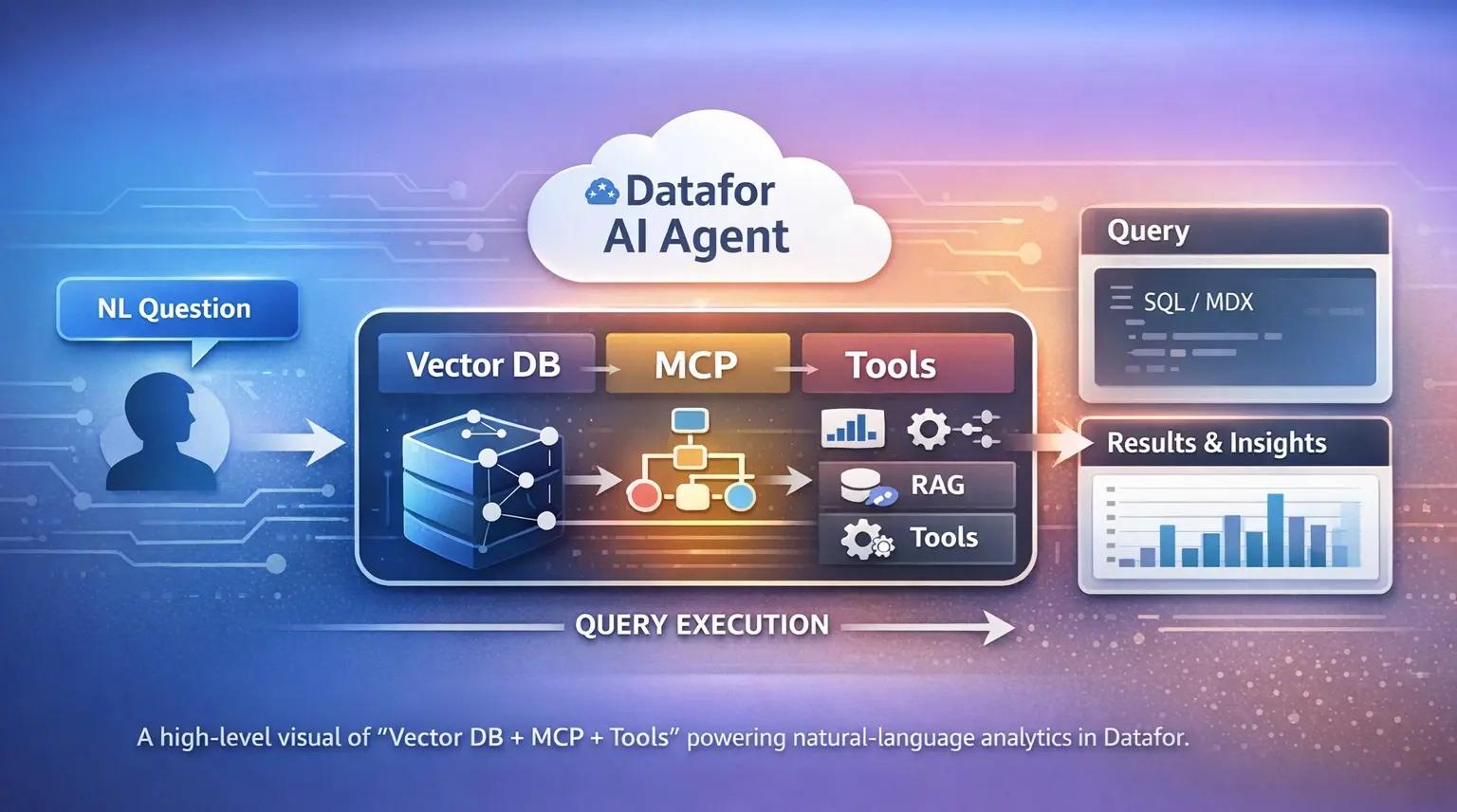
AI for analytics should not be treated as an isolated front-end feature. It should be connected to a governed analytics platform that brings together self-service BI, embedded analytics, semantic modeling, and controlled data access.
That is what makes AI responses more than just convenient. It makes them usable in real business environments.
When AI is grounded in governed semantics, permissions, and reusable analytics logic, it can help users move faster without compromising consistency or trust.
That is the difference between AI chat over dashboards and AI-ready analytics.
Final Thought
AI chat is a valuable addition to analytics. It makes data more approachable and reduces friction for users who do not want to navigate complex reporting interfaces.
But it is not enough on its own.
If the analytics foundation is fragmented, AI will reflect that fragmentation. If business meaning is inconsistent, AI will struggle to provide trustworthy answers. If governance is weak, conversational access will only increase the risk.
The future of analytics is not just chat.
It is governed, semantic, permission-aware, AI-ready analytics that supports multiple ways of working with data without losing consistency underneath.
Dashboards still matter. AI matters too.
But without the right foundation, putting AI chat on top of dashboards is only a surface-level improvement.