Why One-Shot Generation Is Not Enough
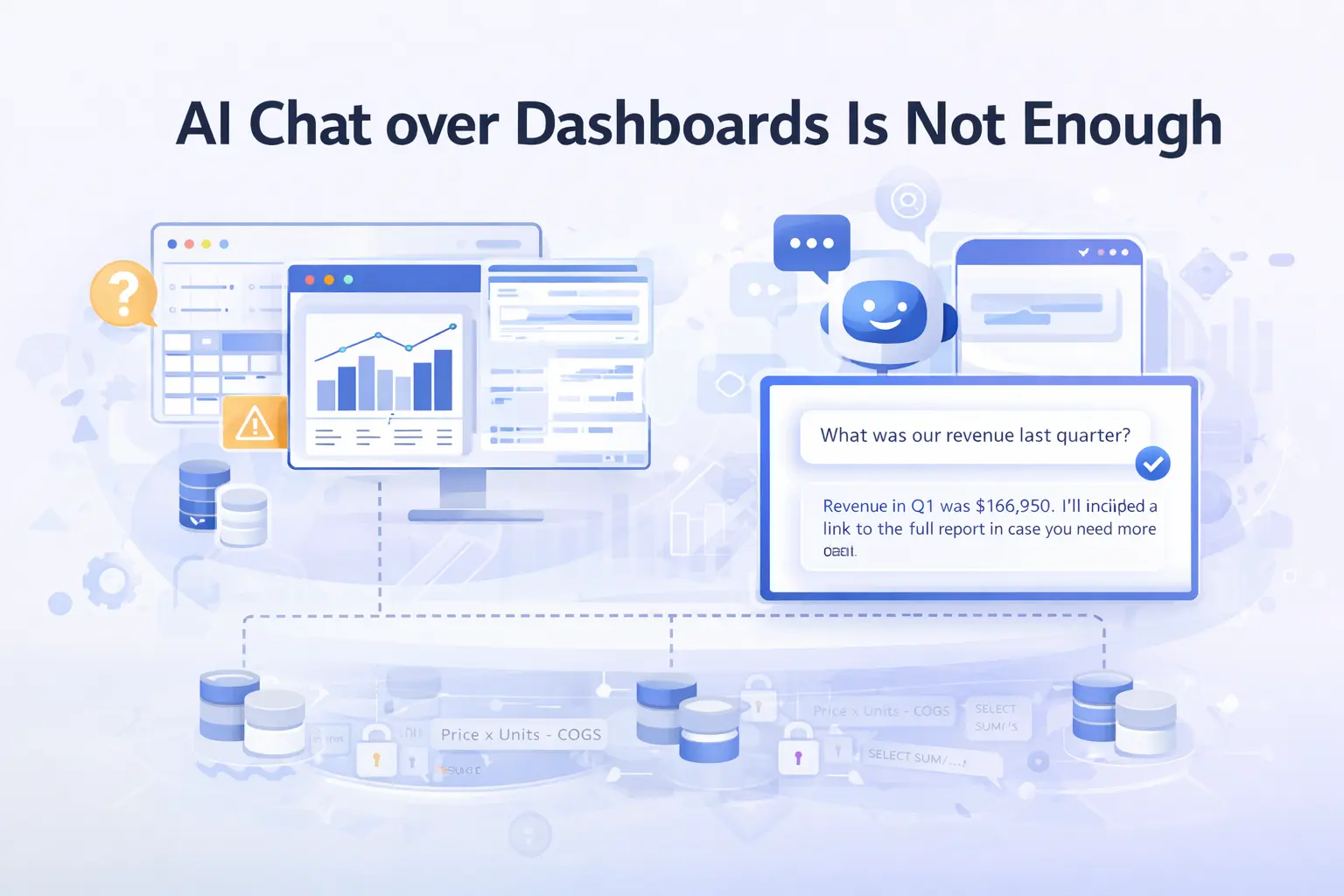
In BI scenarios, a user question often contains multiple challenges at the same time. That makes a one-prompt, one-generation approach fragile and hard to govern.
- Ambiguous semantics: terms such as “East Region,” “key accounts,” or “this month” may have specific business definitions.
- Complex models: multiple cubes, hierarchies, calculated measures, and permission constraints often need to be considered together.
- Explainability requirements: users need not only the result, but also which metrics, dimensions, and filters were used.
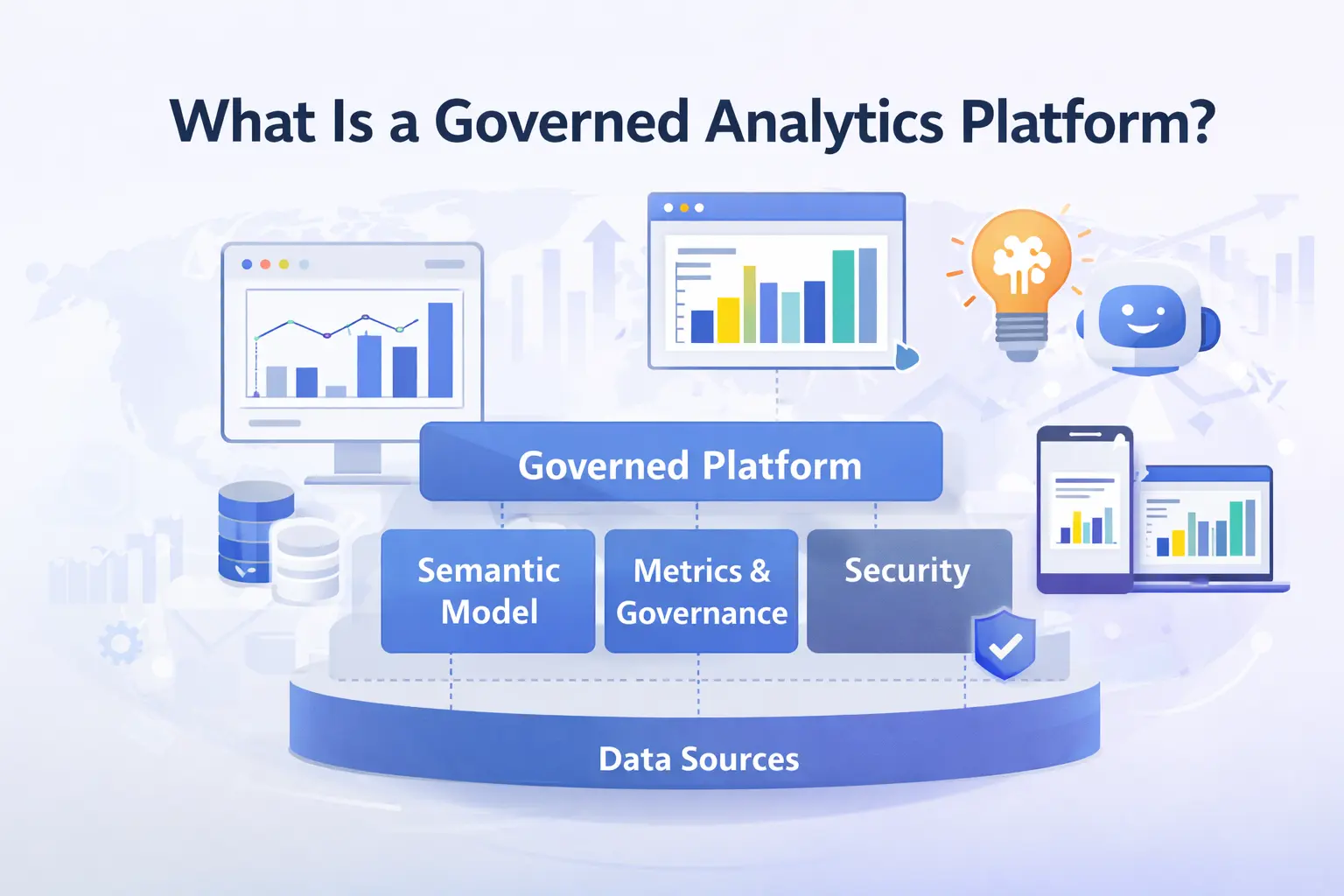
- Governance requirements: permissions, auditability, performance, cost control, and observability all matter in production.
That is why the more reliable pattern is decompose, orchestrate, and validate, rather than asking the model to do everything at once.
The Three Foundations of Datafor AI Agent
Vector Database: Find the Right Context
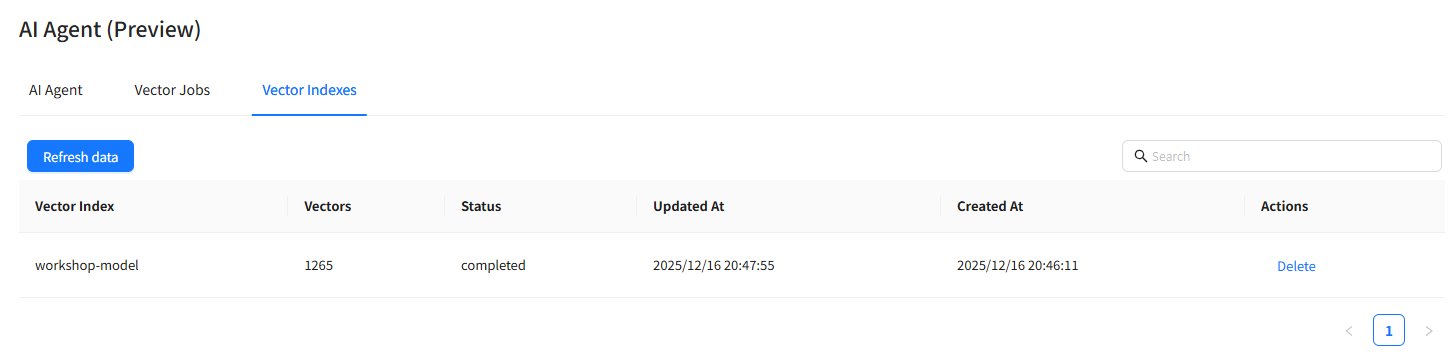
The vector database solves a practical problem: when a user says “East region,” “best-sellers,” or “top customers,” how does the system quickly map that language to the right model objects and candidate values?
Typical indexed content includes:
- semantic layer metadata such as dimensions, levels, measures, calculated measures, and business descriptions
- text-based dimension values such as city names, product names, and customer names
- business terms, synonyms, definitions, and FAQs where needed
MCP: Orchestrate Tool Calling
MCP turns model capability into engineering capability. It provides a standard way to describe tools, define inputs and outputs, and control how tools are called together.
- It standardizes tool definitions, including inputs, outputs, and calling constraints.
- It enables composable orchestration across multiple tools, including retries and fallbacks.
- It makes the workflow extensible, so capabilities do not have to be hard-coded into a single prompt.
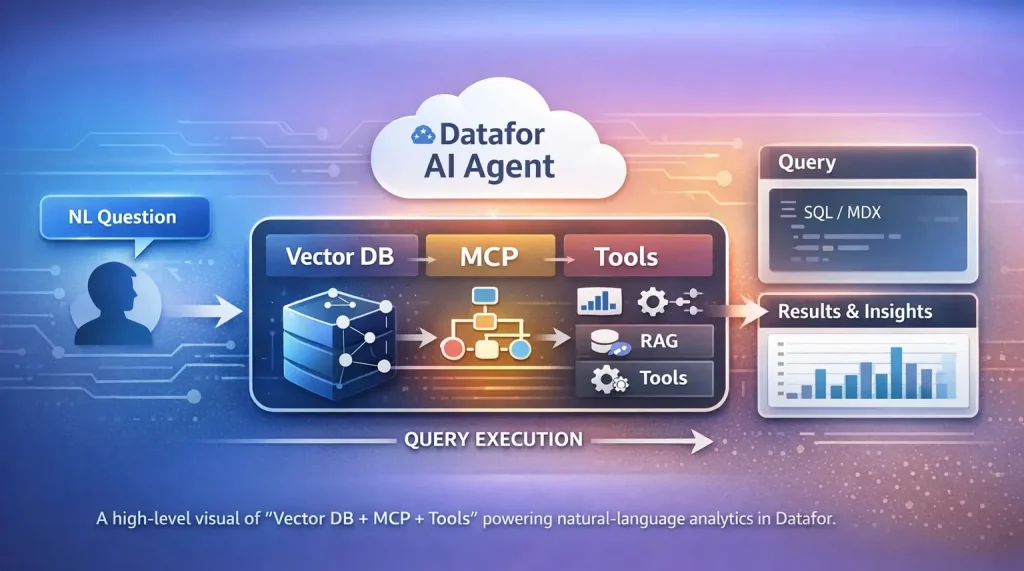
In short, the vector database handles retrieval, MCP handles orchestration and calling standards, and the tools ensure the workflow is done correctly.
Tools: Execute the Work Correctly
In Datafor AI Agent, tools are designed with clear responsibilities and boundaries. Each tool solves one class of problems, which makes the overall system easier to control and extend.
- Model metadata tool to fetch the ground-truth semantic layer, including available cubes, dimensions, levels, measures, and calculated measures
- Query execution tool to run the final SQL, MDX, or QueryModel and return results
- Model analysis tool for structural reasoning, such as which cube to use, which fields apply, and whether the path is feasible
- Field value mapping tool to map user phrases such as region, product, or customer to candidate values in the model
- RAG query planning tool to turn the question, retrieved context, and model capability into an executable plan
- RAG search tool to retrieve definitions, synonyms, field descriptions, and business rules from the vector database
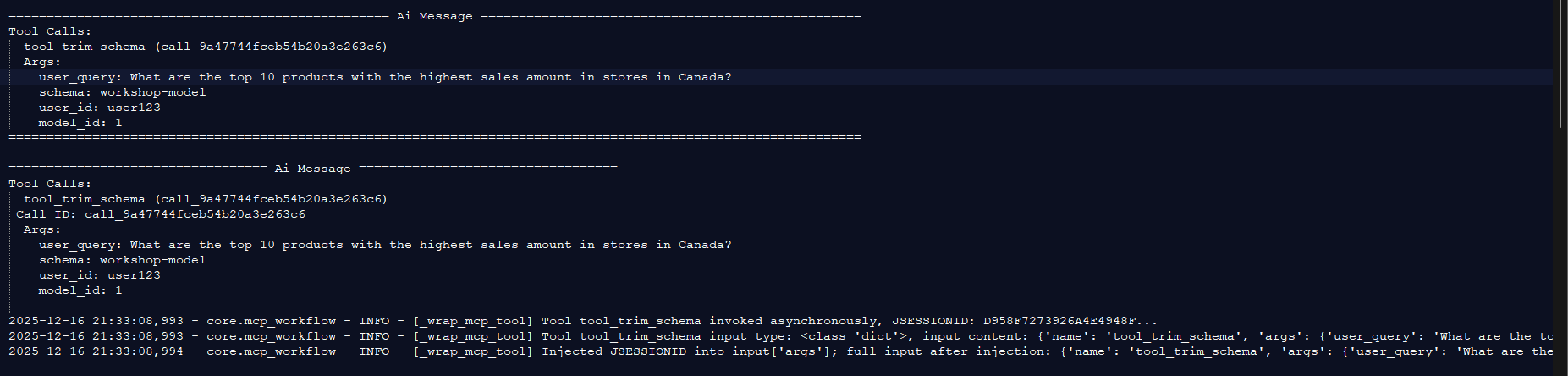
- Model pruning tool to remove irrelevant model elements for the current question and reduce the search space
How a Typical Question Is Processed
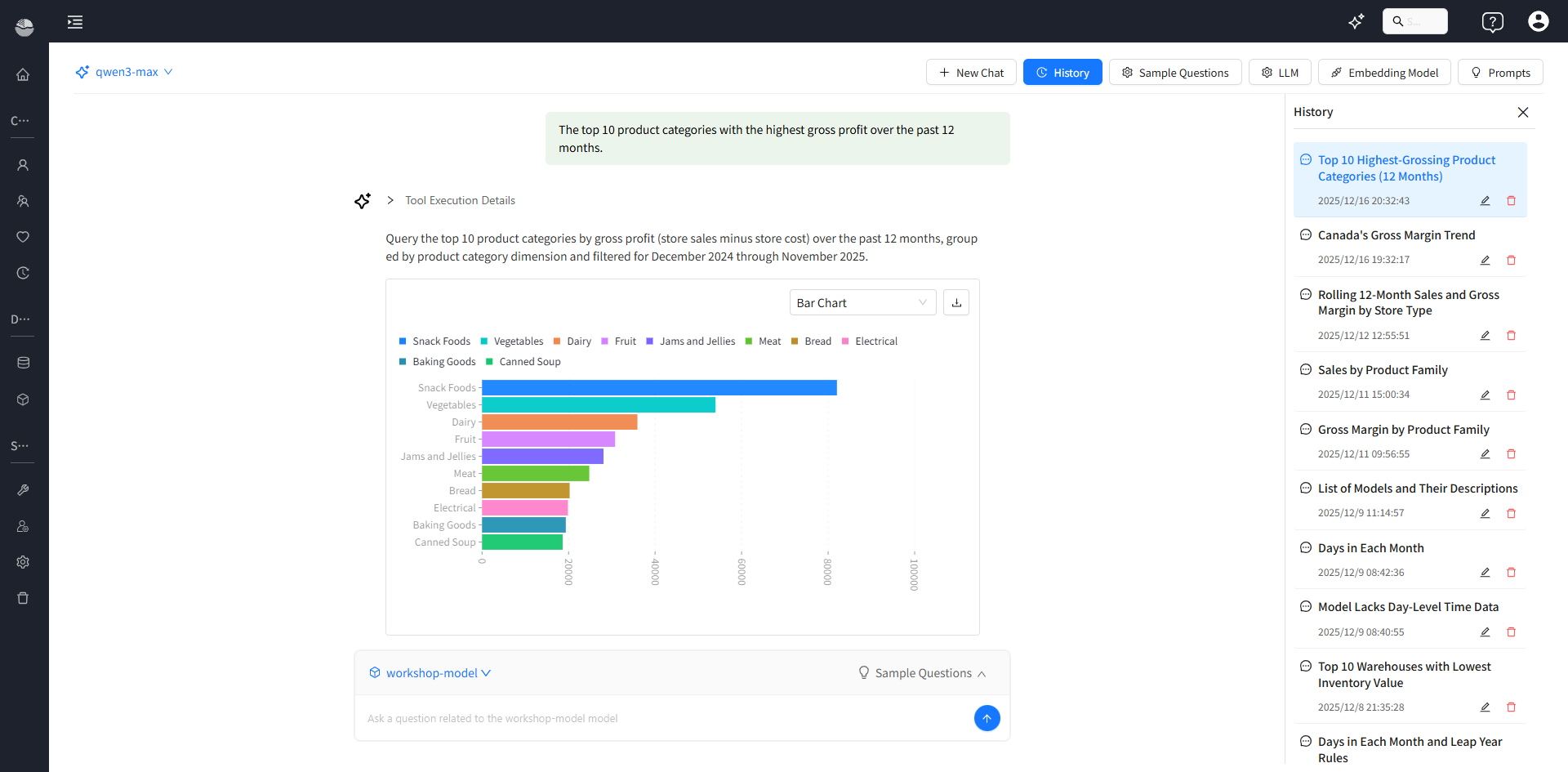
Consider this example question:
The top 10 product categories with the highest gross profit over the past 12 months.
A controlled pipeline usually follows these steps:
- Fetch and understand the model through metadata retrieval and model analysis.
- Retrieve context through RAG search and ground key terms into model objects through value mapping.
- Narrow the scope through model pruning.
- Generate the query plan through RAG planning.
- Execute the query and return the results.
The key principle is simple: AI handles understanding and planning, while the system handles execution and governance.
Benefits of This Architecture
- More stable accuracy: fewer hallucinated fields and fewer incorrect metric selections
- Controlled cost: pruning and retrieval reduce context size and call overhead
- Explainable and auditable: each step can output structured evidence
- Easy to extend: adding a new tool upgrades the overall capability
- Fits embedded analytics: permissions, tenant isolation, and auditing can be enforced at the API layer
Closing
Vector databases solve “find it,” MCP solves “invoke it,” and the toolchain solves “do it right.” Together, these three foundations enable Datafor AI Agent to deliver a more stable, explainable, and governable natural-language analytics experience, even with complex semantic models and real-world business definitions.