Modern organizations have more data than ever, but more data does not automatically lead to better decisions.
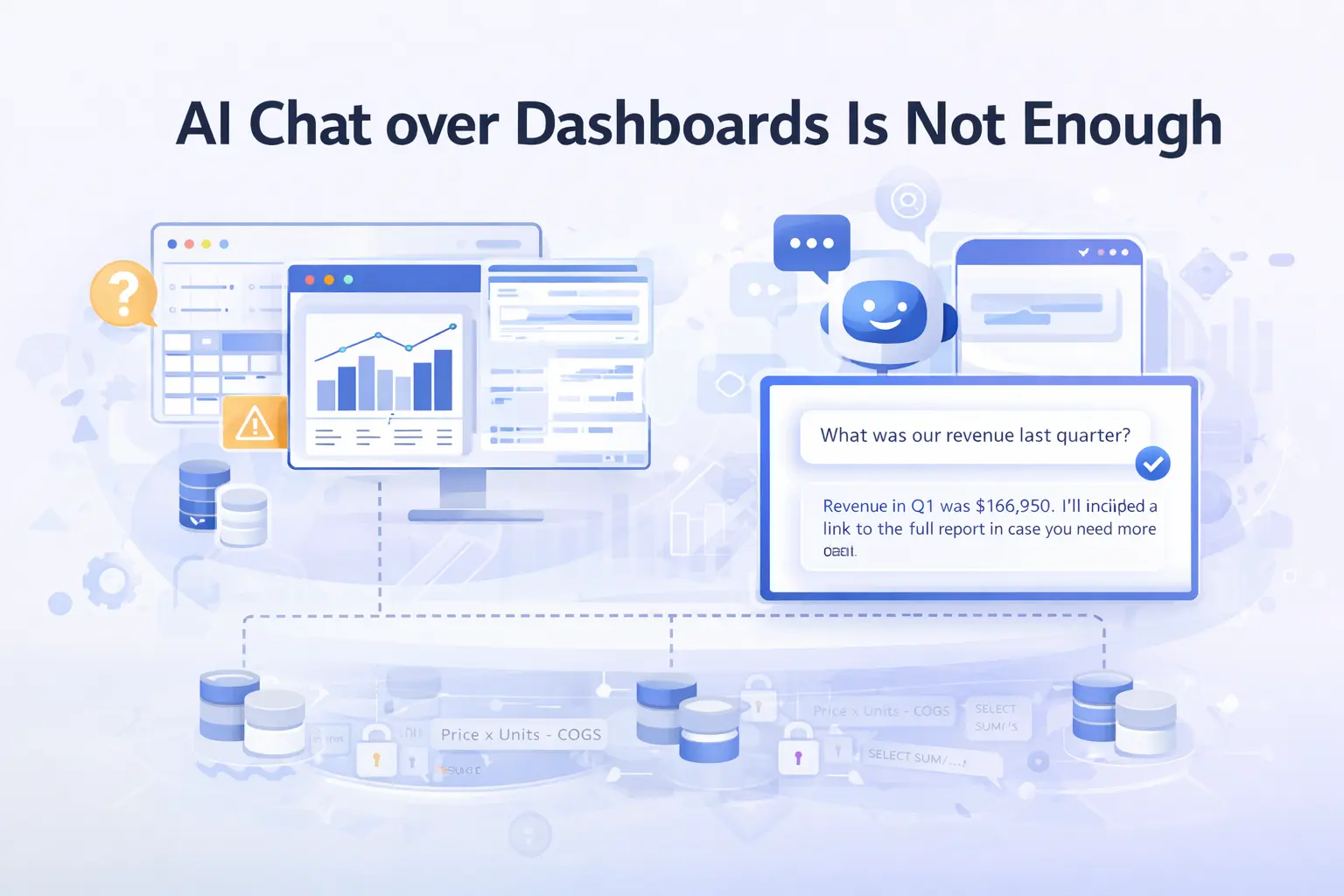
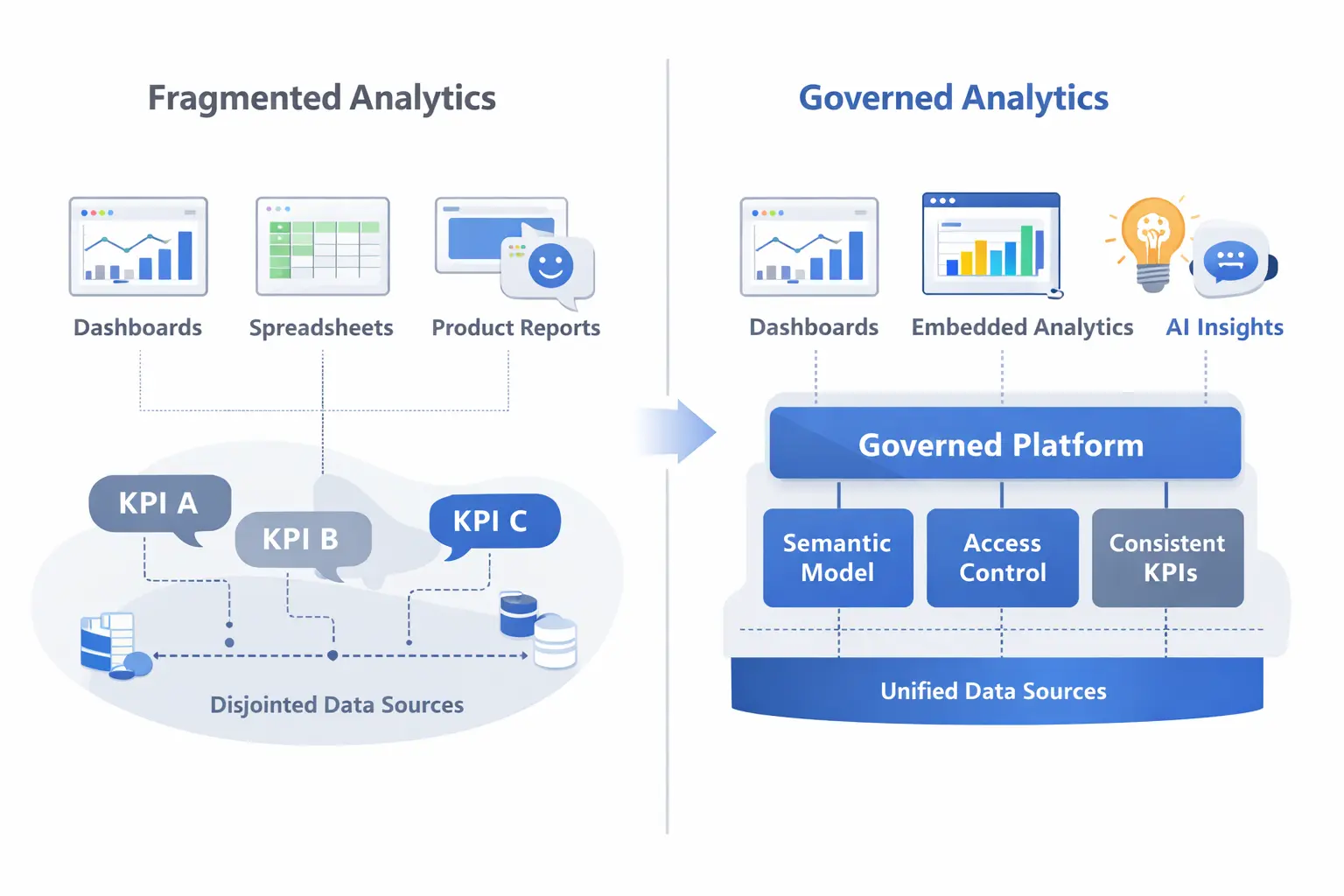
In many companies, analytics is still fragmented. Business teams view dashboards in one tool, analysts define metrics in spreadsheets or SQL, embedded reports live inside products with separate logic, and AI features sit on top of data that may not even be consistently modeled. The result is familiar: different teams see different numbers, access is difficult to control, and trust in analytics starts to break down.
This is where a governed analytics platform becomes important.
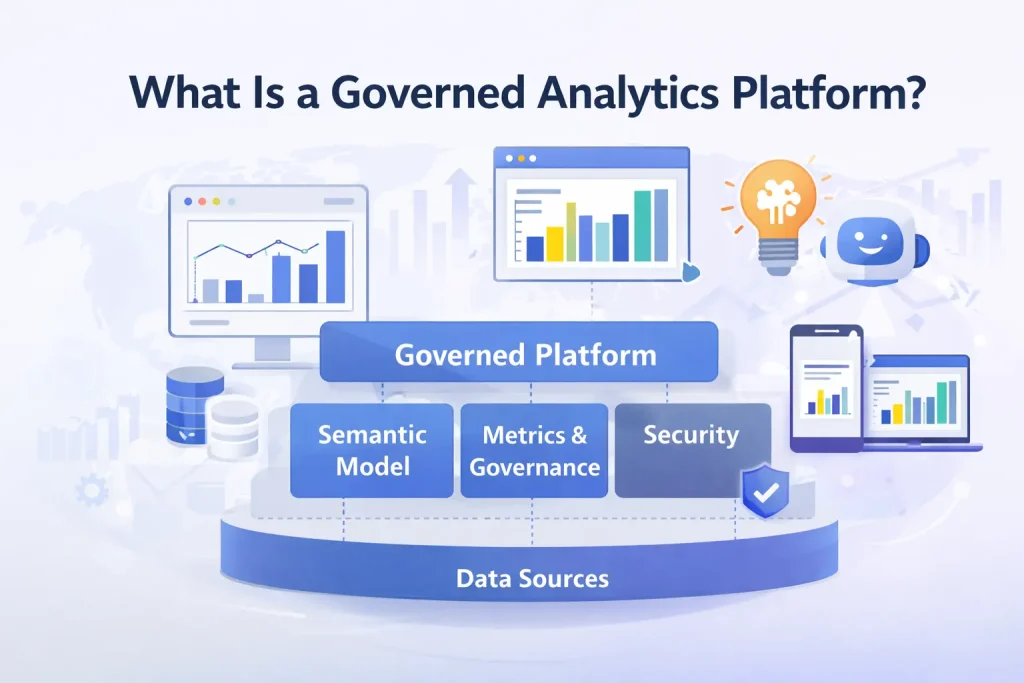
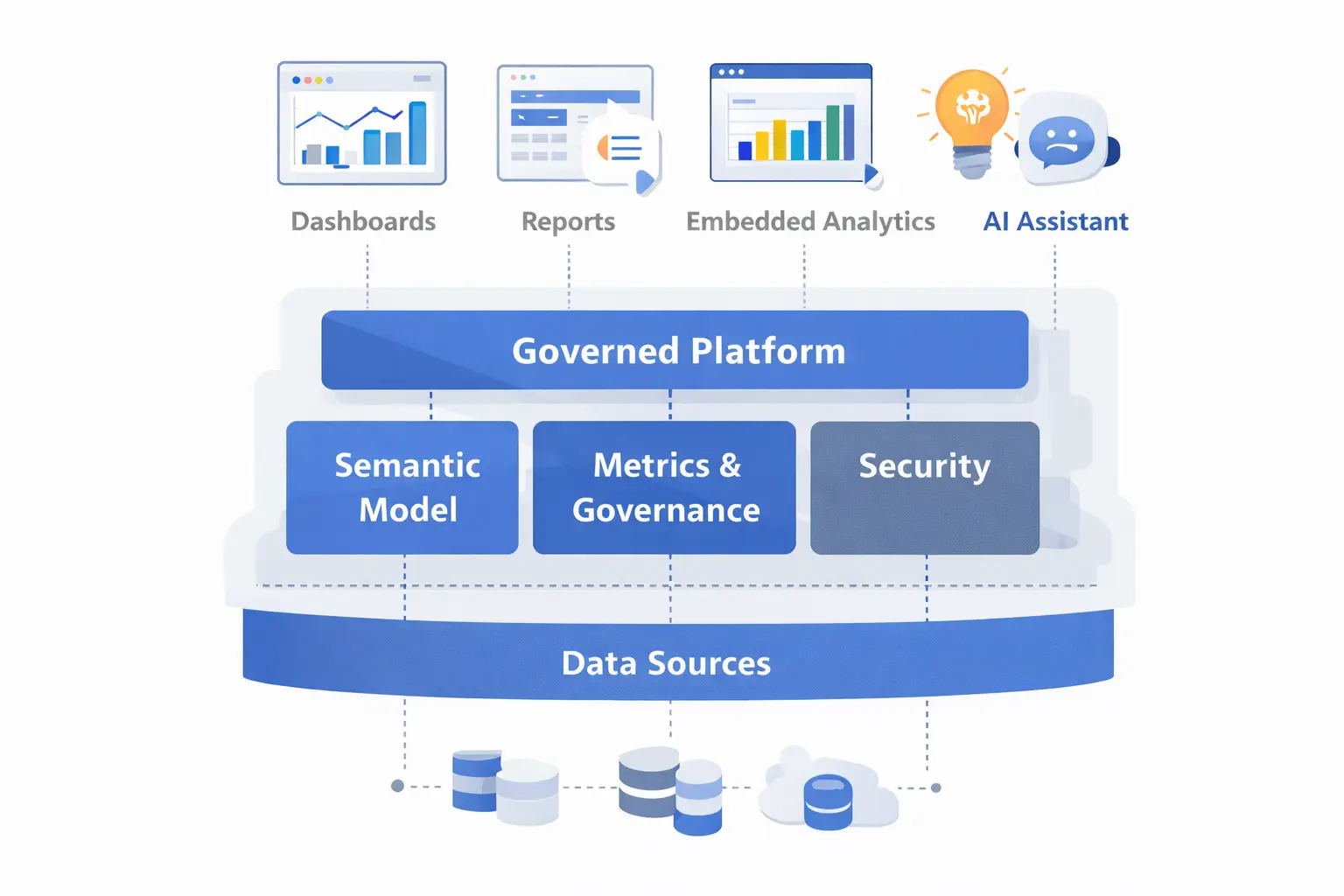
A governed analytics platform helps organizations deliver analytics at scale without losing control over consistency, security, or trust. It brings together data access, semantic definitions, permissions, reporting, dashboards, and increasingly AI-driven experiences on top of a shared and governed foundation.
For companies moving beyond isolated BI tools or ad hoc reporting, this is becoming a necessary architecture rather than a nice-to-have feature.
Why Traditional Analytics Setups Start to Break
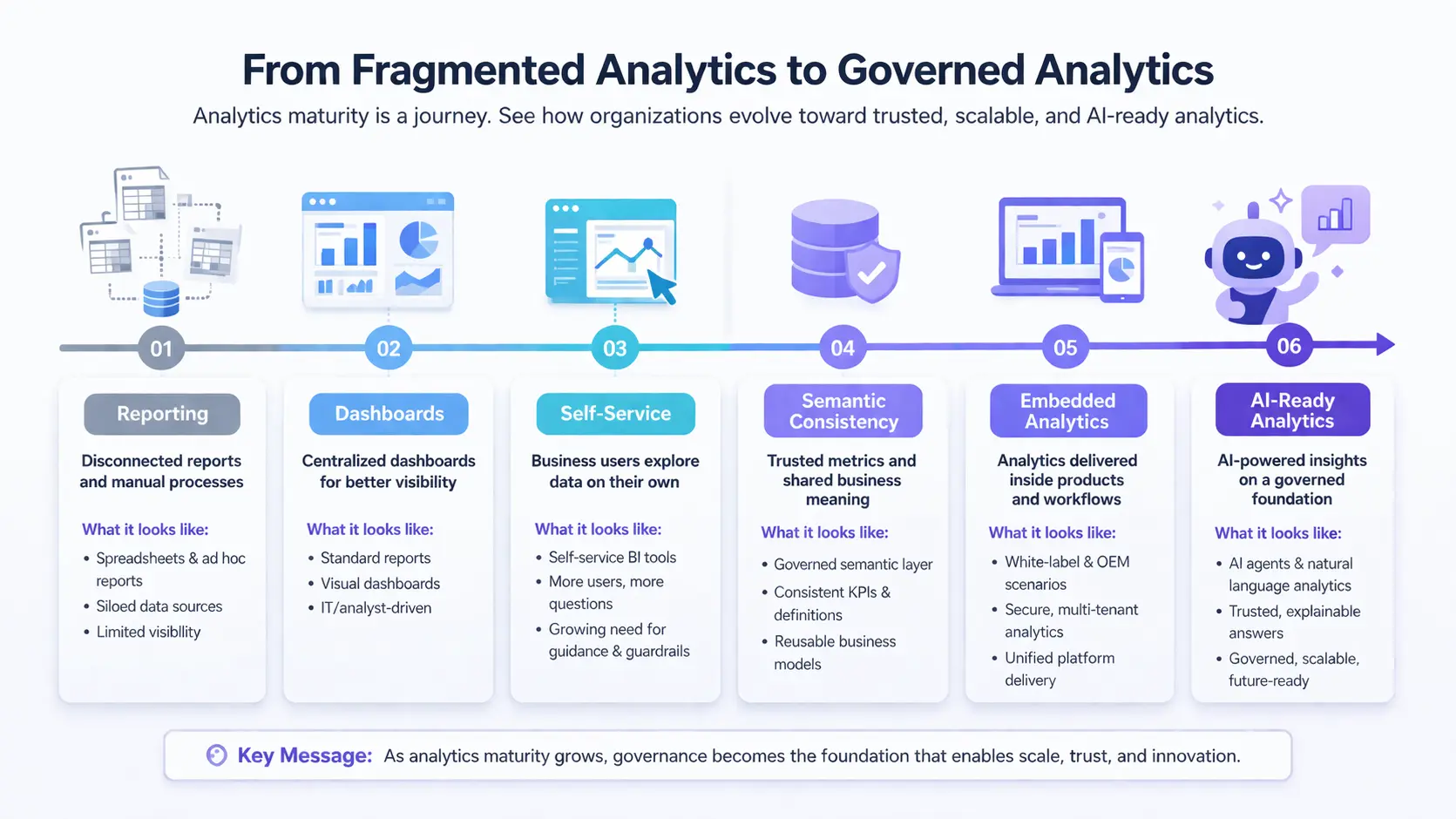
Many analytics environments grow organically.
A team starts with dashboards. Another team builds reports for a specific department. Product teams need customer-facing analytics and create an embedded reporting layer. Leadership asks for consistent KPIs across the business. Later, AI is added to make analytics more conversational or accessible.
Each step makes sense on its own. But over time, the stack becomes harder to manage.
Common problems begin to appear:
- the same metric is defined differently across teams
- permissions are handled inconsistently
- dashboards multiply without shared standards
- embedded analytics and internal analytics diverge
- business users lose confidence in the numbers
- AI-generated answers reflect inconsistent or poorly governed data
This is not just a tooling problem. It is a platform design problem.
A governed analytics platform addresses this by giving organizations a single analytics foundation that is both flexible and controlled.
What Does “Governed” Actually Mean?
In analytics, governance does not mean making things slow or bureaucratic.
It means creating the conditions for analytics to scale safely and consistently across teams, roles, and use cases.
A governed analytics platform usually includes several core elements.
1. Consistent business definitions
Metrics should not mean one thing in finance and another thing in sales. Governance starts with shared definitions for KPIs, dimensions, calculations, and business logic.
This is often enabled through a semantic layer or semantic modeling approach, where technical data structures are translated into business-friendly concepts that can be reused consistently across reports, dashboards, and applications.
2. Controlled access and permissions
Not everyone should see the same data. Governance includes role-based access, row-level security, tenant isolation where needed, and clear rules for who can view, build, edit, or share analytics assets.
This matters not only for security, but also for usability. When access is governed correctly, users see the data that is relevant to them without unnecessary complexity.
3. Reusable and trusted analytics assets
Instead of every team recreating reports, governed platforms encourage reusable datasets, models, metrics, and visual assets. This reduces duplication and helps standardize how the business works with data.
4. Support for different delivery models
Organizations rarely use analytics in only one way. Internal dashboards, self-service BI, embedded analytics, and AI-powered analytics increasingly need to coexist. Governance ensures these experiences are built on a shared foundation instead of becoming disconnected silos.
5. Auditability and control
Governed analytics platforms make it easier to understand how data is being used, what logic powers a report, who has access, and how changes affect downstream assets. This visibility becomes even more important as analytics becomes more distributed across teams and products.
A Governed Analytics Platform Is More Than a BI Tool
A BI tool typically helps users create dashboards and reports. That is useful, but it is only part of the picture.
A governed analytics platform goes further. It is designed to support analytics as an enterprise capability, not just as a set of isolated visualizations.
That means it should support:
- self-service analytics for business users
- governed semantic modeling for consistent metrics
- secure data access and permission control
- embedded analytics for products and portals
- scalable administration across teams or tenants
- AI extensions that can operate on trusted analytics foundations
In other words, governance is not an extra layer added after analytics is built. It needs to be part of the platform architecture from the beginning.
Why It Matters Now
The need for governed analytics is becoming more urgent for three reasons.
Analytics is now used by more people
Analytics is no longer limited to analysts. Business users, product managers, operational teams, external customers, and partners all expect access to data. As the audience grows, inconsistency becomes more expensive.
Embedded analytics is becoming mainstream
Many SaaS companies and enterprises now need analytics inside customer-facing products, internal portals, or operational workflows. Once analytics moves beyond internal dashboards, governance becomes much harder to ignore.
AI raises the stakes
AI can make analytics faster and more accessible, but it does not solve weak foundations. If metrics are inconsistent, permissions are unclear, or business meaning is poorly modeled, AI will simply surface those problems in a more visible way.
Trusted analytics becomes even more important when answers are generated conversationally rather than inspected manually.
What a Governed Analytics Platform Should Help You Do
A strong governed analytics platform should help your organization do several things at once.
It should make analytics easier for business users, without sacrificing consistency.
It should support self-service, without turning every dashboard into a custom interpretation of the truth.
It should let product teams embed analytics into applications, without building a separate analytics stack from scratch.
It should make security and permissions manageable, not scattered across disconnected tools.
And increasingly, it should provide a foundation for AI-powered analytics experiences that are grounded in trusted business definitions and governed access rules.
That balance is the real value of a governed platform: flexibility with control.
Signs Your Organization May Need One
Not every company starts with a governed analytics platform. Many reach it after experiencing the limits of fragmented analytics.
You may need one if:
- different teams report different numbers for the same KPI
- dashboard sprawl is making analytics harder to manage
- self-service BI is growing, but trust is declining
- you need both internal BI and embedded analytics
- access control is complex or inconsistent
- you want to introduce AI into analytics, but your data definitions are not standardized
- business users still depend heavily on analysts for basic interpretation
Governed Analytics and the Role of the Semantic Layer
One of the most important building blocks of a governed analytics platform is the semantic layer.
The semantic layer helps bridge the gap between raw data structures and business meaning. It provides a governed way to define metrics, dimensions, hierarchies, and relationships so that analytics assets across the organization are based on shared logic.
Without this layer, governance often becomes reactive. Teams try to document definitions after reports have already spread. With a semantic layer, consistency can be designed into the analytics experience from the start.
This becomes even more valuable when analytics is consumed in different ways, including dashboards, embedded applications, and AI interfaces.
Governed Analytics Is Also About Delivery
Governance is not only about data modeling or permissions. It is also about how analytics is delivered.
A governed analytics platform should support different delivery models without forcing teams into disconnected solutions.
For example, the same governed foundation should ideally support:
- executive dashboards for internal leadership
- self-service analytics for departments
- embedded dashboards inside software products
- secure analytics experiences for customers or partners
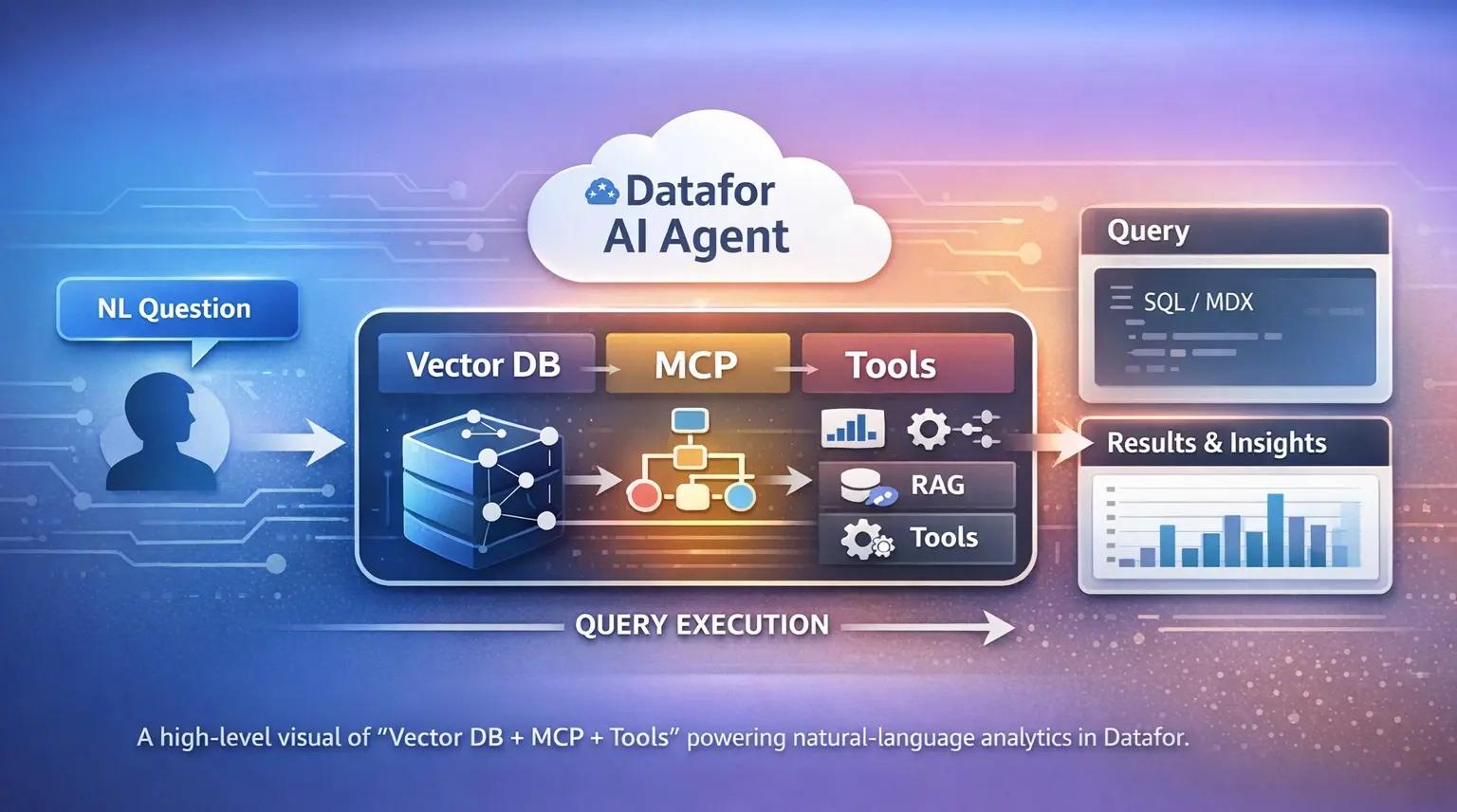
- AI assistants that answer questions based on governed business logic
When these experiences are built separately, the cost of inconsistency increases. When they are delivered from a shared platform, organizations gain both efficiency and trust.
Where Datafor Fits
Datafor is designed around this idea: analytics should be flexible enough for modern business use cases, but governed enough to remain trusted at scale.
That means bringing together self-service BI, embedded analytics, semantic modeling, and AI-ready analytics on a shared foundation. Instead of treating governance as a separate control layer added later, Datafor treats it as part of how analytics is modeled, managed, and delivered.
For organizations that need professional analytics experiences without sacrificing consistency, governance is not a constraint. It is what makes analytics scalable.
Final Thought
A governed analytics platform is not just about control. It is about making analytics usable, consistent, and trustworthy across a growing number of users, applications, and decision points.
As analytics expands from dashboards to embedded products and AI-driven interfaces, the quality of the foundation matters more than ever.
If analytics is going to scale across the enterprise, it cannot rely on disconnected definitions, scattered permissions, and isolated delivery models.
It needs governance by design.