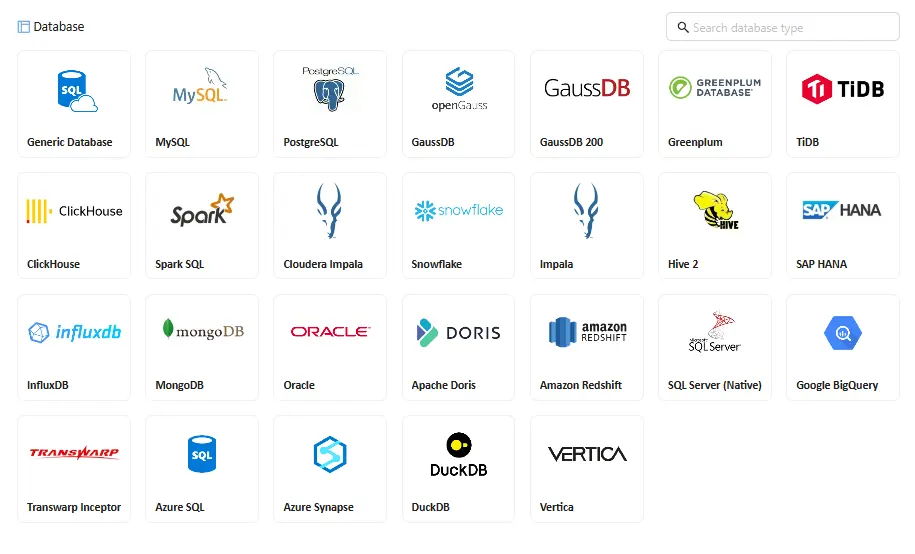

Connect schemas, tables, views, and files. Define metrics, dimensions, hierarchies, and logic in one semantic layer for BI, embedded analytics, and AI.
Why teams model with Datafor
Semantic Modeling gives every dashboard, report, and AI response a consistent business foundation.
Define metrics once
Standardize revenue, margin, inventory, pipeline, and other KPIs across every delivery surface.
Make analytics easier to use
Expose business-friendly measures and dimensions instead of raw tables, joins, and field names.
Strengthen governance
Keep definitions, access rules, and delivery aligned as analytics expands into embeds and AI.
How semantic modeling works
Build business-ready models in a workflow that stays visual, structured, and reusable.
1
Connect source structures
Start from schemas, tables, views, or files your team already uses.
2
Model relationships and behavior
Visualize joins, organize entities, and shape model behavior.
3
Add business meaning
Define measures, dimensions, hierarchies, and calculated fields.
Governance built into the model
Define trust where business meaning is defined, so every downstream experience inherits the same control.
Row-level security
Restrict returned rows by user, role, tenant, region, or other business context.
Object-level control
Control visibility of tables, views, columns, and semantic objects from one governed layer.
Shared policy reuse
Apply the same access logic across dashboards, embedded analytics, APIs, and AI.
Multiple delivery surfaces. One business meaning.
Make semantics and governance executable across every delivery channel.
Data Sources
Relational databases
Oracle · MySQL · PostgreSQL
Data warehouse / lakehouse
Snowflake · Redshift · BigQuery
Files / NoSQL databases
Excel / CSV · MongoDB
Semantic Execution Layer
Query Object
Unified metrics, dimensions, and relationships for transparent, explainable execution.
Governance
RBAC, RLS, ACL, plus auditability and lineage.
Optimization
Compilation, routing, caching, and rate limiting with room for extension.
Delivery
BI analytics
Dashboards, reports, and interactive analysis experiences.
Embedded analytics SDK / iFrame
Flexible integration for products, portals, and external applications.
AI Analyst / API
Agent-ready analytics access for AI workflows, apps, and automation.
Why the modeling layer matters.
Abstract raw structure
Turn schemas, tables, views, and files into business-friendly objects.
Accelerate delivery
Reduce repeated modeling work and move faster from source to usable analytics.
Reuse logic at scale
Keep metrics, dimensions, and access rules consistent across every channel.
Support trusted AI
Give AI a governed business foundation instead of raw structures and fragmented definitions.
Build a semantic foundation for BI, embedded analytics, and AI.
Standardize business logic, simplify self-service analytics, and deliver trusted insights across every surface.